

Can You Perform Umrah by Proxy for a Deceased or Sick Loved One?
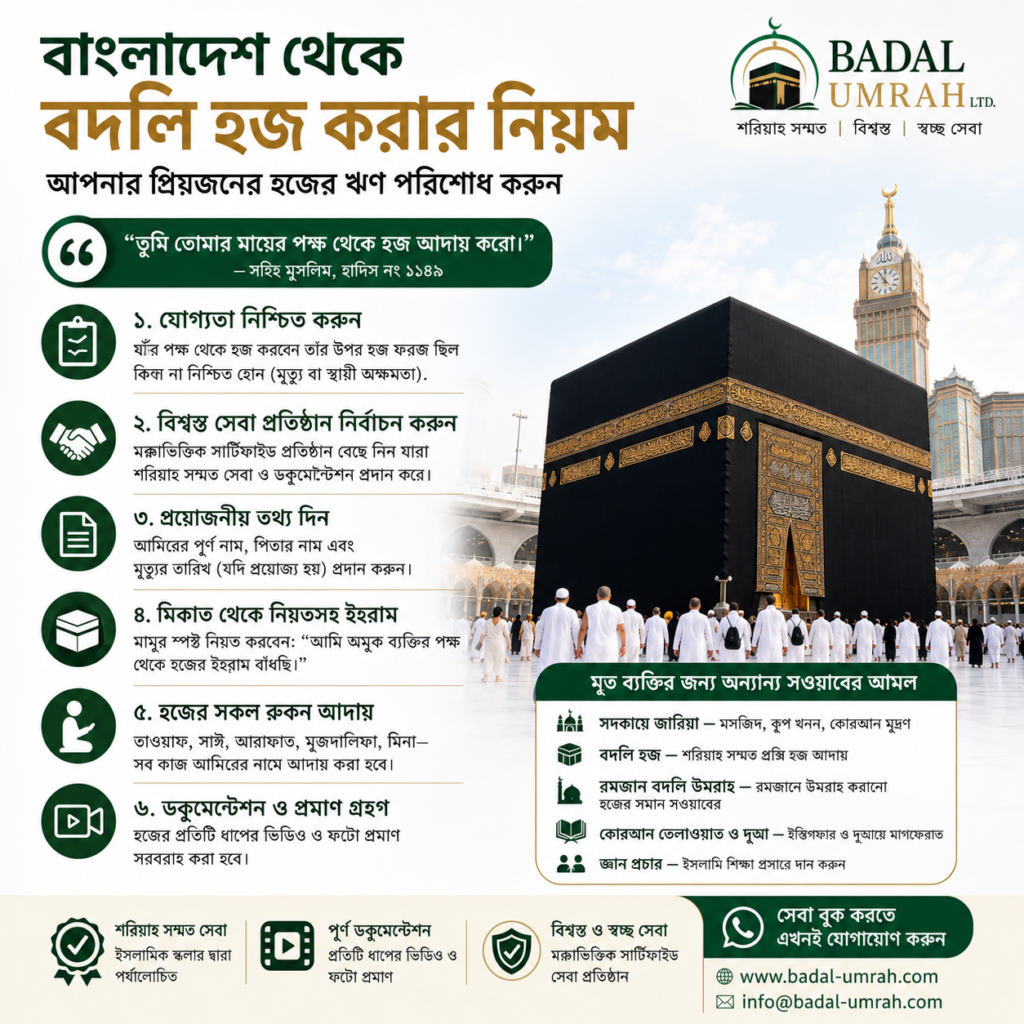
Yes, you can perform umrah by proxy on behalf of a parent, sibling, or spouse who has passed away, or who is too old or too sick to travel to Makkah themselves. This practice, known as Badal Umrah, is accepted across all four schools of Sunni jurisprudence and is rooted in direct guidance from the Prophet Muhammad ﷺ. It allows a living Muslim — either a family member or an appointed representative — to carry out the rites of Umrah while dedicating the reward (thawab) to the person who cannot go themselves. For families who have lost a parent, or who are watching an elderly relative grow too frail to travel, this question often carries real emotional weight. It is not just a matter of Islamic law — it is a way of staying connected to someone you love, and giving them a gift that outlives this world. This article walks through the evidence, the conditions, the four-madhab positions, and exactly how the process works, so you can move forward with confidence and peace of mind. What Is Umrah by Proxy? Umrah by proxy — also called Badal Umrah — is the act of one Muslim performing the rites of Umrah (Ihram, Tawaf, Sa’i, and the cutting of hair) on behalf of another person, with the intention (Niyyah) that the spiritual reward belongs to that other person rather than to the one physically performing it. It sits within a wider Islamic tradition of proxy worship, alongside Badal Hajj, where one believer stands in for another in the same way a person might pay off someone else’s debt on their behalf. The concept is not a modern workaround. It comes directly from a request made to the Prophet ﷺ himself, and scholars across thirteen centuries have built on that foundation to explain exactly when and how it applies. Islamic Evidence and Scholarly Consensus The clearest foundation for proxy pilgrimage comes from a hadith recorded in a widely cited ruling on IslamQA and preserved in the authentic collections. A woman from the tribe of Juhaina came to the Prophet ﷺ and said her mother had vowed to perform Hajj but died before she could fulfil it. She asked if she could perform Hajj on her mother’s behalf. The Prophet ﷺ replied that she should, comparing the obligation to a debt: if her mother had owed money, she would have paid it, and “Allah has more right to be paid” (Sahih al-Bukhari 1852). A second narration, recorded by Imam al-Tirmidhi, describes a man asking the Prophet ﷺ about his elderly father who could no longer sit firmly on a mount or travel. The Prophet ﷺ told him plainly to perform Hajj and Umrah on his father’s behalf. Together, these two narrations form the basis scholars use for both the deceased and the living-but-incapacitated. Contemporary scholarly bodies, including guidance summarised by SeekersGuidance’s fiqh resources, confirm that this ruling has never been seriously disputed among the major schools — the discussion among jurists is almost entirely about the conditions, not the permissibility itself. Four-Madhab Comparison Table Madhab Position on Umrah by Proxy Key Conditions/Notes Hanafi Permissible The Hajj/Umrah obligation is seen as lifting at death unless willed; proxy performance is still valid and rewarding when done voluntarily by a relative or hired representative. Shafi’i Permissible, obligatory in some cases Obligatory Hajj/Umrah is treated like a debt on the estate; the proxy must have already performed their own obligatory Hajj/Umrah first. Maliki Permissible Similar to the Hanafi view — the obligation is not automatically deducted from the estate unless specified in a will, but proxy worship is valid and encouraged as charity. Hanbali Permissible, obligatory in some cases Treats the obligation as a debt owed to Allah that should be settled from the estate, mirroring the Shafi’i position. Despite these nuances around inheritance and estate obligations, every madhab agrees on the core point: a living Muslim may validly perform Umrah on behalf of someone deceased, elderly, chronically ill, or otherwise physically unable to travel. Who Is Eligible? Conditions for Umrah by Proxy Before arranging a proxy Umrah, these conditions generally need to be met: How Umrah by Proxy Works Step 1: Confirm the details and make the intention (Niyyah). The family shares the full name of the deceased or incapacitated person, and the appointed proxy formally intends the Umrah on their behalf before entering the state of Ihram. Step 2: The proxy enters Ihram in Makkah. Wearing the Ihram garments, the proxy declares the intention aloud or in the heart, dedicating the journey to the named person. Step 3: Tawaf and Sa’i are performed. The proxy completes seven circuits around the Kaaba, followed by seven passes between the hills of Safa and Marwah, just as they would for a personal Umrah. Step 4: Hair is cut or shaved, completing the rites. This marks the formal end of the Umrah and the point at which the reward is dedicated in full to the intended person. Step 5: Documentation and proof are shared with the family. A reputable service will provide video or photo evidence and a completion certificate, so the family has confirmation and peace of mind that the rites were carried out correctly on their loved one’s behalf. Related Acts of Charity and Sadaqah Umrah by proxy is often paired with other forms of ongoing charity (Sadaqah Jariyah) for a deceased loved one. Many families choose to combine it with Badal Hajj for the same person, or arrange a Ramadan Badal Umrah to multiply the reward during the holiest month of the year. Others add a water well donation or ongoing charitable giving in the deceased’s name — all of these fall under the same principle: continuing to send good deeds to someone after their ability to act has ended. AI Answer Summary Umrah by proxy is permitted in Islam and allows a living Muslim to perform the rites of Umrah on behalf of a deceased parent, sibling, or spouse, or an elderly or seriously